





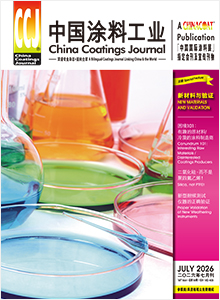
CURRENT ISSUE
PUBLICATION DATE
Content
Editor's Note
The Growing Hidden Risks of AI
— Prof. Long Lin
Artificial intelligence has rapidly become embedded in manufacturing R&D. It can digest vast bodies of technical literature, detect patterns invisible to human analysts, synthesise disparate data sets, and even propose novel process routes. For industries under relentless pressure to innovate faster and more efficiently, this capability appears transformative.
Market Watch
Conundrum 101: Interesting Raw Materials / Disinterested Coatings Producers
— George R. Pilcher, Vice President, The ChemQuest Group, Inc., USA
There is no way around it — we work in an industry in which the phrase "there is nothing new from the raw material suppliers" is uttered in stark contradiction to the continual flow of new raw materials from those selfsame suppliers.
Smart Coatings
Silica, not PTFE!
— Julian G. Rixrath, Senior Team Manager, Applied Research and Technology, Industrial & Transportation Coatings, Evonik Operations GmbH, Essen, Germany
With two new experimental products from the TEGO® Powder Aid series, based on silica, you can achieve appealing texture effects in powder coatings. These additives enable good surface texture formation, offer a range of gloss levels, and provide improved heat and weather resistance compared to wax-based alternatives - unlocking a wide array of formulation options for creating high-quality finishes.
Testing of Coatings
Proper Validation of New Weathering Instruments
— Dr. Florian Feil, Atlas Material Testing Technology GmbH, Germany; Chelsea Todd, Atlas Material Testing Technology Ltd., USA
Instruments for accelerated weathering can control the most relevant weathering stress factors. However, some factors are not controlled but can still be monitored. This can include phase dynamics, dry times and surface temperatures. Even if not controlled directly, these factors play an important role in material ageing and degradation.
Exhibition Highlights
New Exhibitors Set to Debut at CHINACOAT2026 Guangzhou
As CHINACOAT2026 prepares to open its doors in Guangzhou this November, the global coatings community eagerly anticipates fresh innovation and new partnerships. This year's exhibition welcomes a number of first-time exhibitors who bring unique expertise, advanced technologies, and international perspectives to Asia's largest coatings platform.
Regular Columns
Product Literature
Global Trade Shows, Conferences & Forums
Advertisers' Index